
Buying guides · 7 min
Best Rain Boots for Toddlers (2026): What Actually Stays On
The best toddler rain boots by type for 2026: rubber, neoprene, soft-shell, and insulated compared on fit, warmth, weight, and whether they actually stay on.
Baby shower gifts for outdoorsy parents that get used: carriers, rain covers, wool layers, waterproof boots, wet bags and a park pass, sorted by when they help.

The baby shower gifts outdoorsy parents actually use are the ones that remove a reason to stay inside: a good carrier, a rain cover that fits it, wool layers, soft waterproof boots, a wet bag, and a state park pass. Skip the cute hiking outfit in newborn size, which gets worn once for a photo. Buy the thing that will be in the car in November. This list is sorted by when it gets used, from the first weeks through the second winter, with notes on what to look for in each category.
We are a boot company, so one of these items is ours. It is one item on a list of twelve, and we tried to be fair about where it falls.
The carrier is the piece of gear that decides whether a new parent walks every day or not. A soft-structured carrier with an infant insert or a newborn mode lets a parent put the baby on, zip a jacket over both of them, and go. Look for wide padded shoulder straps, a supportive waist belt, and a hood for rain and naps. If the parents already have one, a second in a different style (a wrap, or a ring sling for quick trips) is still welcome.
A waterproof cover that goes over the carrier and baby, with a hood, is the gift that turns a carrier into an all-weather tool. It is also the thing nobody thinks to buy for themselves until they are standing in the rain with a damp baby. Match it to the carrier brand if you can; universal covers fit most.
Merino wool onesies, leggings and sleep sacks in six-month and twelve-month sizes. Wool is warm when damp, does not smell, and goes under everything. It is expensive enough that parents hesitate to buy it, which makes it a very good gift. Two sizes up from newborn is the sweet spot.
Waterproof crawling booties, $39.99. Two sizes, five colorways. Preorders open.
If the parents are stroller people, a clear rain cover that fits their model is the stroller equivalent of the carrier cover. For the stroller plus car seat crowd, a car seat poncho or shower-cap style cover works for the dash from door to car.
Once a baby can sit unsupported, usually around six months, a framed backpack carrier opens up real hiking. These are bulky and pricey, which is why they make a good group gift. Look for a kickstand, a sunshade that doubles as a rain shade, and storage for diapers and snacks. Some families prefer to stay with a soft carrier for the whole first year; ask before buying.
A zippered waterproof bag for the soaked clothes, the muddy boots and the diaper that happened at the trailhead. Cheap, endlessly useful, and nobody registers for it. Buy two sizes.
Around six months, babies start dangling feet out of carriers and, soon after, standing in things. Socks and soft shoes soak through immediately. Hard rubber boots do not fit or stay on at this age. What works is a soft, waterproof pull-on boot with a cuff that cinches over the pant leg, sized to the age window rather than a shoe size.
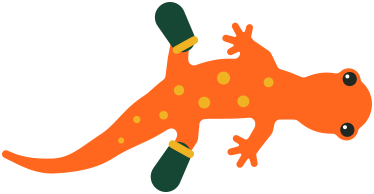
This is where Newt Boots come in. They are waterproof crawling booties for the crawling stage, six to eighteen months, cut and sewn in the Pacific Northwest, worn over a rain suit, and sized by age range so you can buy for the coming winter without a measurement. The two sizes are 6 to 12 months and 12 to 18 months, at $39.99 a pair; for a baby due in spring or summer, 6 to 12 months lands in the first wet season. Sold in pairs. Newts would need four. Our sizing guide explains how the ranges work, and our best rain boots for toddlers post is honest about what to buy once the baby is walking.
A waterproof shell suit that goes over everything, with elastic at wrists and ankles and a hood. One piece beats separates at this age because nothing rides up when the baby is carried or crawling. Size up; these are worn over fleece and wool.
For cold-and-wet days, a full-body bunting or a fleece suit under the rain shell. A bunting with fold-over hands and feet covers the first winter; a suit with separate legs works better once the baby is in a carrier with leg openings.
Toddler wool socks go in puddles, get lost at daycare, and get worn out. A six-pack in two sizes is a genuinely useful gift and it fits in a card.
For the toddler, not the parent. A tiny pack holds a snack and a stuffed animal, and the kid who carries their own pack walks farther. Pick one with a chest strap so it stays on.
A small insulated bottle for warm milk or soup on a cold trail, plus a couple of leakproof snack containers. Low glamour, high use.
An Oregon State Parks annual pass or a Washington Discover Pass covers trailhead parking for a year. For families in the Pacific Northwest this is one of the best gifts on the list: it removes the small friction of paying at the kiosk and makes the drive to the trail an easy yes.
A year's membership to a local arboretum, botanical garden, zoo or children's museum with outdoor space. Rainy-day fallbacks that are already paid for get used.
An offer to come along on walks for the first few months, or to watch the baby while the parents get out alone, is worth more than most of the items above. Write it on a card with actual dates.
Whatever you pick, the test is simple: will it be in the car on a wet Tuesday in November? If yes, it is a good gift.

The best toddler rain boots by type for 2026: rubber, neoprene, soft-shell, and insulated compared on fit, warmth, weight, and whether they actually stay on.
How to clean kids' rain boots, dry them without ruining them (no direct heat), machine-wash fabric boots safely, stop mildew, and store them for next year.
Rain boots vs snow boots for toddlers: how they differ in warmth, waterproofing, weight, and traction, when one pair can do both jobs, and when you need two.